A good cleaning plan protects both the appearance and condition of a property. This guide explains the practical considerations EcoLux discusses with clients before defining a professional scope.
Start with the finish—not the strongest product
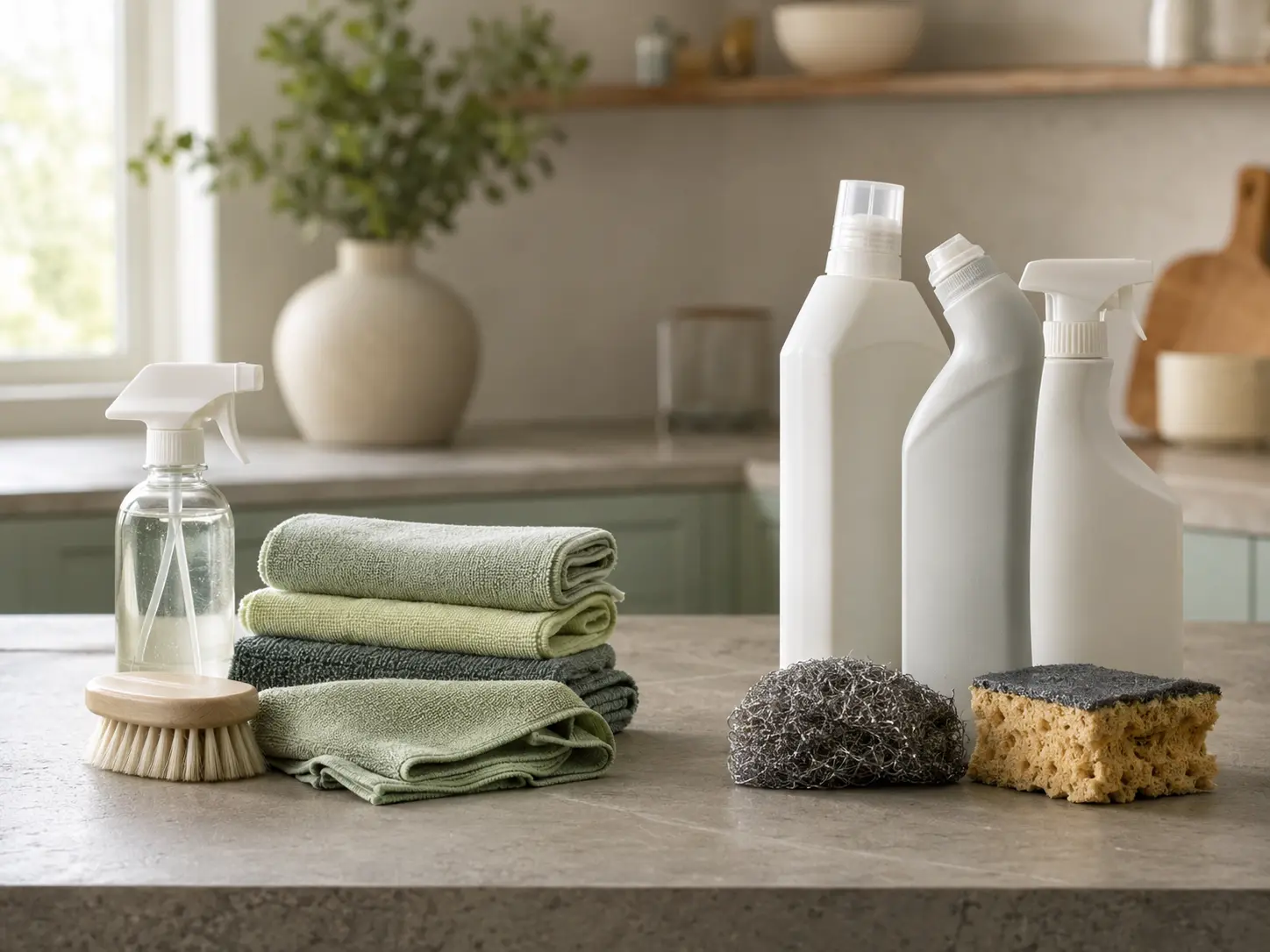
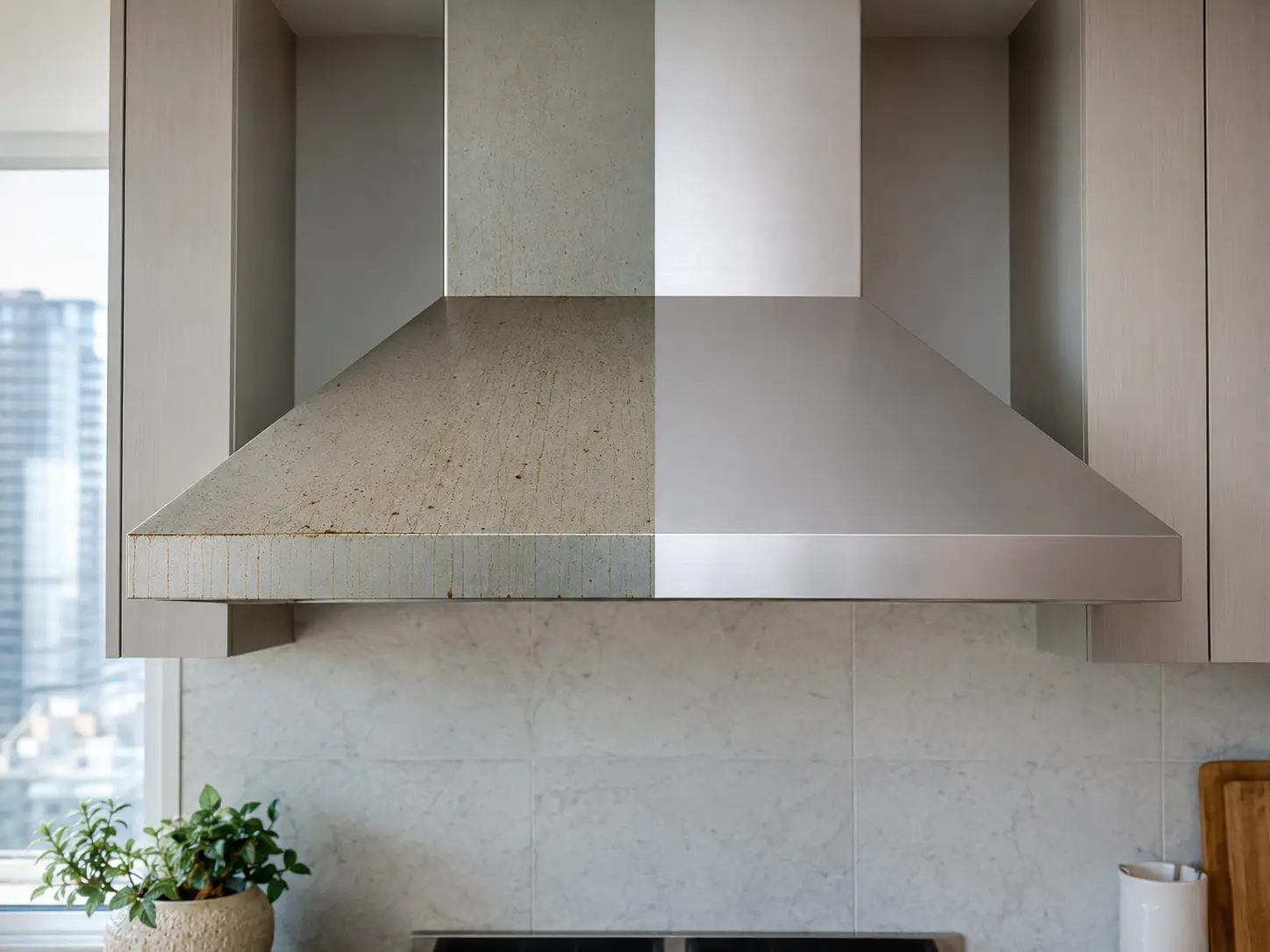
Range hoods may be stainless steel, painted metal, glass or a combination of materials. Check the manufacturer’s guidance first. Test any product in an inconspicuous area and avoid abrasive pads that can permanently change the finish.
The U.S. Environmental Protection Agency’s Safer Choice program evaluates product ingredients against human-health and environmental criteria. The label can help identify qualifying products, but it does not replace the appliance manufacturer’s instructions or a finish-compatibility test.
A safe step-by-step approach
Disconnect power when the manufacturer permits and ensure the cooking surface is cool before beginning.
- Remove filters according to the appliance instructions
- Loosen surface grease with a suitable degreaser and adequate dwell time
- Use a non-scratch cloth and work with the stainless-steel grain
- Keep excess moisture away from controls, motors and electrical openings
- Rinse residue with a clean damp cloth and dry completely
- Reinstall only fully dry filters
Mistakes that cause damage
Steel wool, aggressive scraping, chlorine products on some metals and mixing household chemicals can create scratches, discoloration or dangerous fumes. More pressure is not a substitute for the correct product and dwell time.
When buildup needs professional attention
Heavy grease can migrate into seams, filters and adjacent cabinetry. A professional cleaner can assess the finish, select appropriate tools and define what can be cleaned safely without dismantling protected appliance components.
AUTHORITATIVE SOURCES
Evidence behind this guide
EcoLux uses official guidance to explain general cleaning and indoor-environment principles. Product labels, manufacturer instructions and conditions at the property remain controlling.
“Safer Choice helps consumers and purchasers find products that perform and contain safer ingredients.”
EPA’s Safer Choice program helps identify products whose ingredients meet its human-health and environmental criteria.
U.S. Environmental Protection Agency: Safer Choice ↗EPA explains the role of Safer Choice and Design for the Environment labels. Appliance manufacturer instructions still control the cleaning method for a specific range hood.
U.S. Environmental Protection Agency: Identifying Greener Cleaning Products ↗PERSONALIZED RECOMMENDATION
Turn this guide into a plan for your property.
Tell us about your space, timing and priorities. We’ll recommend an appropriate service and prepare a clear quote.